


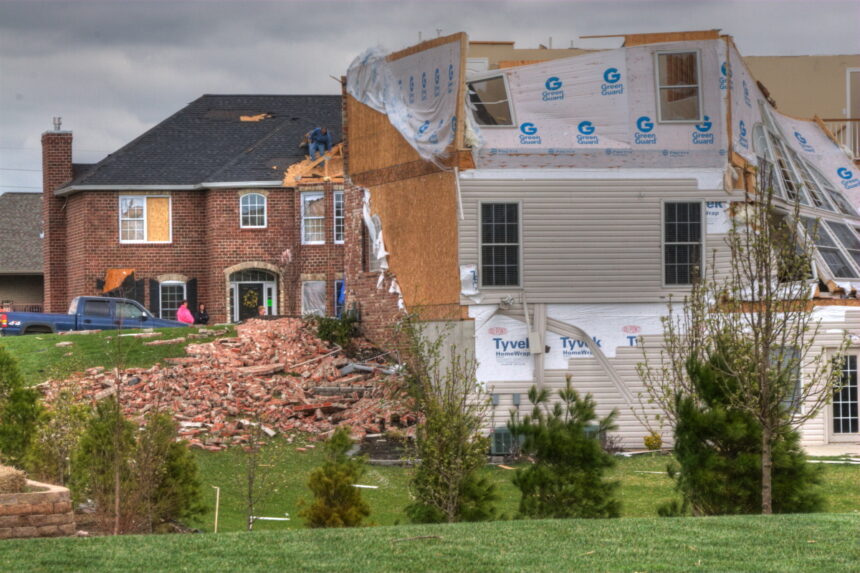
Rising homeowners insurance costs are becoming a growing financial burden for Americans, with many policyholders reporting sharp increases in premiums over the past few years.
A new survey from the Pew Research Center found that 71% of homeowners said their insurance costs have increased in recent years, while 42% said those costs have risen “a lot.” The survey, conducted in March among more than 3,500 U.S. adults, highlights mounting concerns over the affordability of protecting one of Americans’ biggest financial assets: their homes.
Insurance experts say the surge in premiums is being driven by a combination of economic pressures, climate-related disasters, and changes within the insurance industry itself.
Inflation has significantly increased the cost of rebuilding and repairing homes, forcing insurers to pay more when claims are filed. Construction materials, labor, and supply chain disruptions linked to the pandemic have all contributed to rising expenses. According to the United States Department of the Treasury, replacement costs tied to property and casualty losses climbed 45% on average between 2020 and 2023.
Climate change is also reshaping the insurance market. More frequent and severe wildfires, hurricanes, floods, and storms have led insurers to pay out larger claims more often. Experts say those rising risks are now being reflected in homeowner premiums nationwide.
“The frequency and severity of storms are going up — and that means your rates are going up,” said insurance expert Peter Kochenburger, a visiting professor at Southern University Law Center.
Federal data shows weather and climate disasters causing more than $1 billion in damages have increased dramatically over recent decades. Areas with the highest climate-related risks are now paying significantly more for insurance coverage than lower-risk regions.
The impact is being felt across most of the country. A report from the Consumer Federation of America found that average annual homeowners insurance premiums rose by $648 between 2021 and 2024, reaching roughly $3,303 per year. Premiums increased in 95% of U.S. ZIP codes during that period.
Some states saw especially steep jumps. Utah recorded a 59% increase in premiums, followed by Illinois at 50%, Arizona at 48%, and Pennsylvania at 44%, according to the report.
Industry analysts say another major factor is reinsurance — insurance purchased by insurers themselves to protect against catastrophic losses. Reinsurance costs have risen sharply in recent years, and insurers are passing those costs on to consumers.
At the same time, more Americans are moving into regions considered vulnerable to climate-related disasters, including coastal and wildfire-prone areas. Researchers say nearly one million homes were built in high-risk areas between 2018 and 2022, increasing insurers’ overall exposure.
Technology is also changing how insurers evaluate risk. Companies are increasingly using predictive models, drone inspections, and data analytics to assess properties. Homeowners with older roofs, outdated plumbing, or aging electrical systems may now face higher premiums or fewer coverage options.
Consumer advocates warn that rapidly rising insurance costs could have broader economic consequences beyond household budgets.
Experts say higher premiums can reduce housing affordability, affect property values, and place additional pressure on lower-income homeowners who may struggle to maintain adequate coverage. Some analysts also warn of potential impacts on mortgage lenders, real estate investors, and local governments that rely heavily on property tax revenue.
“It’s definitely a pervasive issue,” said Amy Bach, executive director of United Policyholders. “At this point, rates have been going up by so much, it just feels unfair.”