

The era of buying just any piece of real estate and watching it appreciate is officially dead. As global central banks navigate a controlled but stubbornly high interest-rate easing cycle in 2026, institutional cross-border capital is aggressively rotating out of China’s property slump and hyper-regulated safe havens like Singapore.
For high-net-worth individuals holding a $1 million USD ticket size, the challenge is structural. It is an amount too large for entry-level retail condos, yet too small to purchase prime commercial assets in gateway cities. Instead, smart money is targeting high-yield emerging hotspots and exploiting sharp currency plays.
According to global property data and market experts, three distinct playbooks have emerged for deploying $1 million USD across the Asia-Pacific (APAC) landscape.
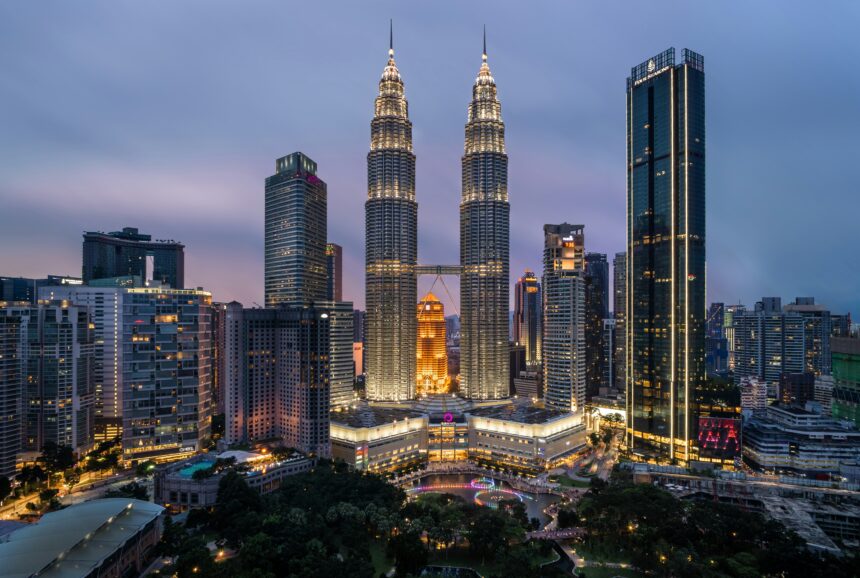
1. The Cash-Flow Compounder: Kuala Lumpur, Malaysia
For investors prioritizing raw rental yield, legal transparency, and foreign ownership rights, Malaysia’s capital is emerging as one of the most compelling risk-adjusted plays in Southeast Asia.
- The Execution: Rather than sinking $1 million into a single ultra-luxury penthouse, insiders are slicing the capital to acquire two to three premium, two-bedroom units in highly connected, transit-oriented developments or established expat enclaves like Mont Kiara and the fringes of KLCC.
- The Financials: Gross rental yields in Kuala Lumpur are currently averaging between 6.0% and 6.5%. This strategy diversifies vacancy risks across multiple doors while capturing the continuous influx of multinational corporate expats and digital nomads.
- The Regulatory Angle: Beyond the monthly cash flow, a $1 million entry point comfortably clears the financial thresholds for Malaysia’s revised MM2H (Malaysia My Second Home) visa program, effectively bundling a long-term residency play with a high-yielding real estate asset.
2. The Currency & Value Play: Tokyo, Japan
The persistent softness of the Japanese Yen against the US Dollar has essentially handed dollar-denominated investors a massive, built-in structural discount on institutional-grade stability.

- The Execution: While $1 million will not buy a premier commercial building in central Tokyo, it goes incredibly far just outside the core three wards. The target asset class here is a newly built or fully retrofitted multi-family duplex or triplex in high-demand, high-density residential wards like Setagaya, Suginami, or Koto.
- The Financials: Net rental yields in these sub-markets hover reliably between 4.5% and 5.5%.
- The Insiders’ Take: This is primarily a wealth-preservation and long-term currency reversion play. Unlike many emerging Asian markets, Japan offers foreigners 100% freehold land ownership, bulletproof title transparency, and zero capital controls, making it the ultimate defensive harbor for a million-dollar allocation.
3. The Growth Engine: Greater Manila Area corridors, Philippines
For aggressive investors chasing double-digit capital appreciation driven by macroeconomic tailwinds, the Philippines is punching heavily above its weight. However, the play has completely shifted away from the saturated residential condo towers of central Metro Manila.
- The Execution: Driven by radical economic decentralization and massive infrastructure linkages—such as the North-South Commuter Railway—capital is chasing industrial-adjacent real estate, fringe-CBD commercial micro-developments, and high-density staff housing. The hotspots are concentrated in the strategic growth corridors of Pampanga to the north, and Cavite and Laguna to the south.
- The Financials: Driven by the global “China+1” supply chain migration and an explosion in high-tech logistics and data centers, occupancy rates in these manufacturing zones are hitting north of 90%. Rental yields for well-positioned pocket commercial developments or pre-leased staff housing regularly clock in at 6.5% to 7.5%.
- The Risk Factor: Because foreign individuals cannot directly own land in the Philippines, investors are executing this play by acquiring premium commercial condominium titles or entering through corporate joint-venture structures.
The $1 Million APAC Real Estate Playbook
| Strategy | Location | Target Asset Class | Expected Yield | Primary Investment Goal |
| The Yield Play | Kuala Lumpur | 2–3 Micro-Premium Condos | 6.0% – 6.5% | High cash flow & long-term residency |
| The Safe Haven | Tokyo Wards | Small Multi-family / Duplex | 4.5% – 5.5% | Currency play & capital preservation |
| The Growth Play | Luzon Growth Hubs | Industrial-adjacent / Fringe Comm. | 6.5% – 7.5% | Aggressive capital appreciation |
Avoid the “Yield Traps”
Market analysts warn that 2026 requires strict underwriting discipline. While speculative markets in parts of Vietnam or Cambodia frequently advertise flashy 8% to 10% returns on paper, they are currently acting as yield traps for individual cross-border buyers. Stricter capital repatriation rules, developer liquidity crunches, and leasehold-only structures mean that for a $1 million ticket size, sticking to liquid, transparent hubs remains the most sound strategic move.
For a broader perspective on adjusting strategies to shifting real estate dynamics globally, check out this discussion on Adapting Strategies in the 2026 Real Estate Market. This video offers insider context on how macro interest rate movements and media narratives contrast with actual on-the-ground street realities for buyers and investors.