


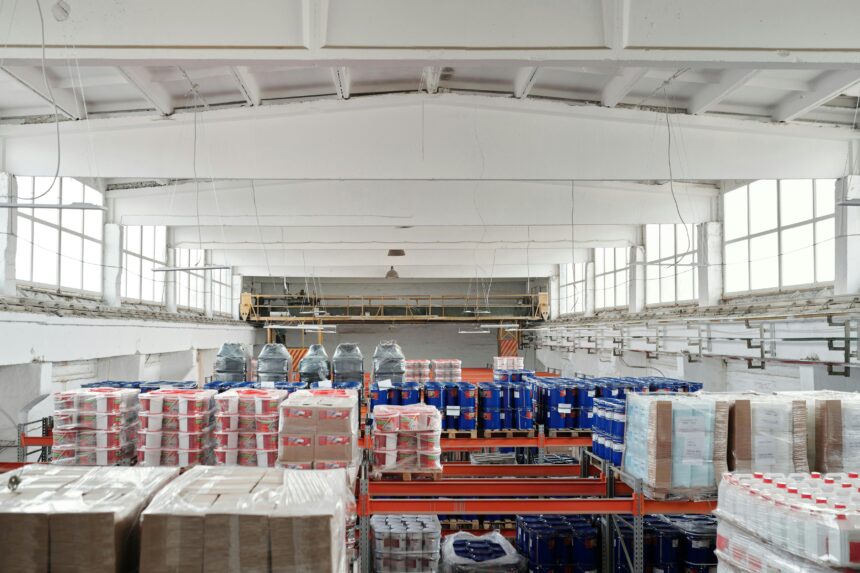
The U.S. industrial real estate market is showing signs of a renewed squeeze after spending much of the past two years absorbing excess warehouse supply created during the pandemic-era building boom.
Executives at major logistics property operators say leasing activity is accelerating again, while new construction has slowed sharply — a combination that is beginning to shift pricing power back toward landlords, especially those with strategically located last-mile facilities.
Glenn Wylie, executive vice president and head of asset management at Link Logistics, said demand conditions have strengthened considerably in recent months after a period of market recalibration.
During the height of the pandemic, companies rushed to secure warehouse space amid surging online shopping demand and supply chain disruptions. Developers responded with an aggressive wave of new construction, but as leasing cooled, the market entered a temporary oversupply phase.
That imbalance now appears to be easing.
More Read

According to Wylie, leasing activity across Link Logistics’ portfolio surged toward the end of 2025 and has continued into this year. The company operates roughly 500 million square feet of industrial space nationwide, with facilities that support an estimated 5% of U.S. GDP.
The rebound is becoming increasingly visible across infill and small-bay warehouse properties tied to last-mile distribution networks — the facilities that allow retailers and logistics operators to move products closer to consumers.
E-Commerce Demand Remains a Major Growth Driver
Consumer expectations around delivery speed continue to shape industrial real estate demand.
Wylie said roughly 75% of consumers now expect two-day delivery, reinforcing the need for warehouse operators to secure facilities closer to dense population centers.
Link Logistics estimates that every $1 billion in e-commerce sales creates approximately 1.2 million square feet of additional industrial space demand.
That trend has provided a strong underlying tailwind for the sector even as broader economic uncertainty persists.
The market has also remained surprisingly resilient despite concerns surrounding tariffs, trade policy, and macroeconomic volatility.
During earlier tariff disputes, many companies delayed warehouse decisions while waiting for policy clarity. This time, according to Wylie, occupiers appear more willing to continue expanding operations despite uncertainty.
That willingness to move forward is viewed by many in the industry as a signal that businesses remain confident in long-term logistics demand.
Supply Is Falling as Construction Slows
One of the biggest shifts in the market is happening on the supply side.
National industrial availability has started declining for the first time since 2021, according to Link Logistics. At the same time, the U.S. construction pipeline has contracted significantly.
Wylie said industrial construction activity has fallen roughly 35% since the third quarter of last year, while new project starts have dropped to decade lows.
Developing infill industrial properties has become increasingly difficult due to land constraints, zoning challenges, and rising construction costs.
That dynamic is especially important for owners of small-bay warehouse space in urban areas, where available inventory remains far tighter than the broader market.
National industrial availability currently sits around 8% to 9%, but small-bay infill properties are operating closer to 5.5% to 6%, according to Link Logistics.
These smaller facilities play a critical role in local delivery infrastructure, supporting both national retailers and regional businesses trying to shorten delivery times.
AI and Data Centers Are Creating New Warehouse Demand
The rapid expansion of artificial intelligence infrastructure is also emerging as an unexpected growth catalyst for industrial landlords.
Data center construction projects are generating spillover demand from contractors, equipment suppliers, and long-term maintenance operators that require nearby warehouse facilities.
Wylie said the sector has seen a noticeable increase in leasing activity connected to data center development over the past several quarters.
Some tenants need temporary space during multiyear construction projects, while others require permanent facilities to store servers, replacement parts, and networking equipment close to operational data centers.
Phoenix has become one of the clearest examples of this trend.
Taiwan Semiconductor Manufacturing Co.’s massive investment in North Phoenix has helped attract dozens of semiconductor-related businesses to the region since 2021, according to Link Logistics.
The company estimates that every gigawatt of data center construction can generate roughly 2 million square feet of related industrial demand.
Similar activity is unfolding across Atlanta, Texas, parts of the Midwest, and other fast-growing logistics and technology hubs.
Bulk Warehouses Are Recovering Too
Large-scale distribution facilities also appear to be rebounding after a difficult stretch.
Warehouse properties larger than 500,000 square feet faced weaker demand during much of 2024 as supply exceeded leasing activity. But market conditions improved sharply beginning in late 2025.
Wylie said major retailers, e-commerce companies, and third-party logistics providers have reentered the market aggressively in recent months.
That includes demand from companies such as Amazon and Walmart, which continue expanding fulfillment and delivery capabilities.
In several markets, the industrial sector has moved from oversupply to undersupply faster than many analysts expected.
Tenants Are Focused on Power and Automation
Industrial tenants are now evaluating warehouses differently than they did even a few years ago.
Traditional building features such as ceiling height and dock access remain important, but many occupiers are increasingly prioritizing power capacity and long-term operational flexibility.
Automation systems, robotics, EV charging infrastructure, and advanced manufacturing equipment are placing significantly higher electrical demands on industrial facilities.
As a result, tenants are asking whether buildings can support future operational upgrades years down the line.
Landlords with deep infrastructure knowledge and strong utility relationships may gain a competitive edge as warehouse operations become more technologically intensive.
For investors and industrial property owners, the latest market signals suggest the sector may be entering another period of tightening conditions — particularly in last-mile logistics hubs where supply remains constrained and consumer delivery expectations continue rising.